

Table of Contents
- What Cleansing Energy With Ritual Tools Actually Means
- What You'll Need Before You Start
- Step 1: Clear Your Space and Yourself
- Step 2: Cleanse Your Ritual Tools With Smoke
- Step 3: Set Intentions for Every Ritual Tool
- Step 4: Use Crystals for Grounding and Charging Plates for Renewal
- Step 5: Match the Cleansing Method to the Tool's Material
- Step 6: Cleanse Your Own Energy
- Frequently Asked Questions
Last Updated: October 4, 2026
What Cleansing Energy With Ritual Tools Actually Means
To cleanse energy with ritual tools is the practice of clearing heavy or stuck energy from a space, an object, or yourself using items like sage, palo santo, crystals, and sound. It works through focused attention and intention, not magic alone. At Blossom Your Awesome Shop, we see it as a reset button for your inner world.
The idea is simple. Energy builds up. Stress, arguments, and long weeks leave a residue. Ritual tools give you a physical way to clear that residue and start fresh.
You do not need to be spiritual to benefit. Many people find the routine itself calming. The act of slowing down and paying attention can ease a racing mind.
Ritual tools are the physical items you use during this practice. Think sage bundles, selenite wands, candles, and feathers. Each one plays a role in clearing or renewing energy.
The American Psychological Association's research on ritual and stress shows that repetitive, meaningful routines can lower anxiety. That is part of why this works.
What You'll Need Before You Start
Gathering your tools first keeps the ritual smooth. You do not want to stop midway to hunt for a lighter.
Here is a simple starter list:
- A sage bundle or palo santo stick for smoke cleansing
- A feather to waft the smoke
- A white candle for purification
- Selenite or quartz for cleansing and protection
- A small bowl of salt or salt water
- A bell or chime for sound clearing
If you are new to this, a full kit saves time. Our Energy Cleansing Kit comes with sage, palo santo, selenite, quartz, a white candle, and an upcycled turkey feather, plus printed instructions.

Step 1: Clear Your Space and Yourself
Start by tidying the room. Clutter holds stale energy, so a quick tidy makes a real difference.
Then wash your hands and take three slow breaths. Set a simple goal in your mind: "I am clearing what no longer serves me."
Walk the room's edges with your candle lit. Move clockwise. Pause at corners and doorways, where energy tends to collect.
- Tidy the space first
- Wash your hands
- Breathe and set a goal
- Walk the edges with light
This step gets you and your space ready to receive the work. Skip it, and the rest feels rushed.
Step 2: Cleanse Your Ritual Tools With Smoke
Smoke cleansing is the most common way to clear ritual tools. Light your sage or palo santo, let it flame, then blow it out so it smolders. Pass each tool through the smoke three times.
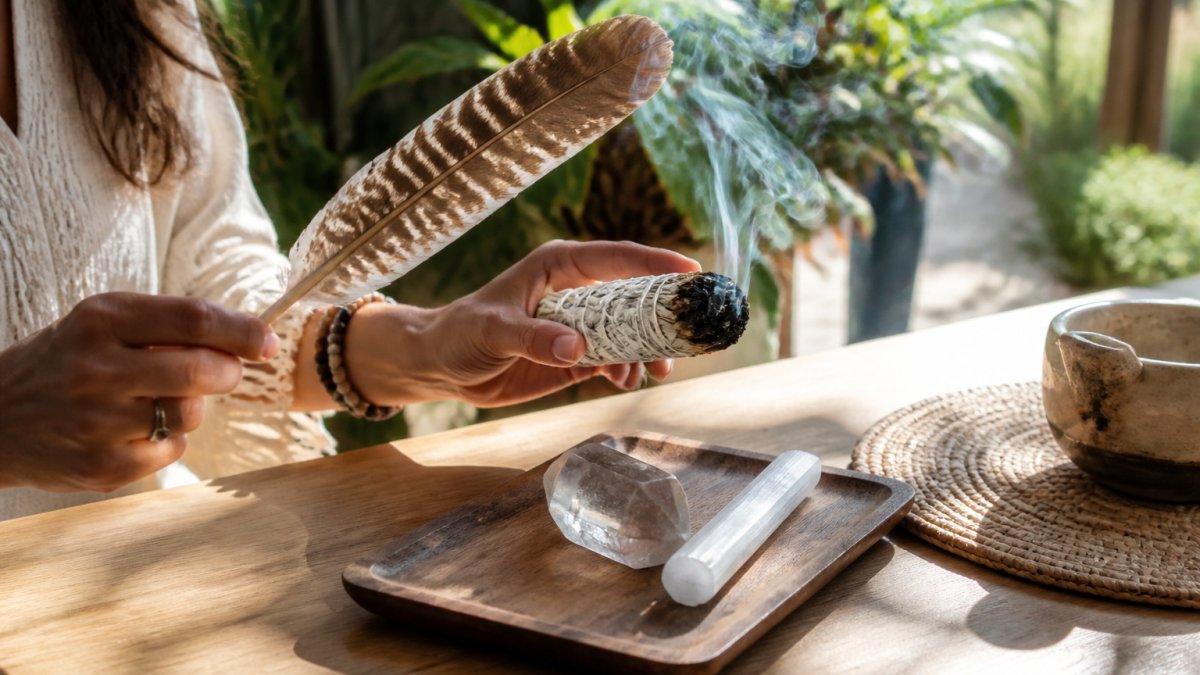
Hold the tool in the smoke for a few seconds. Picture heavy energy lifting away. Use your feather to guide the smoke around the item.
Do this for crystals, wands, jewelry, and any item you use in your practice. A Smithsonian overview of sage in Indigenous traditions explains why sage carries such deep cultural weight.
Step 3: Set Intentions for Every Ritual Tool
Setting intentions means deciding what each tool is for before you use it. Hold the item, state its purpose out loud, and breathe.
For example, hold your quartz and say, "You protect and heal." Hold your selenite and say, "You cleanse." This is how to set intentions for ritual tools in a way that sticks.
Why does this matter? Because a tool with a clear job is easier to reach for. You stop guessing and start using.
- Hold the tool in both hands
- State one clear purpose
- Breathe and repeat it once
- Place it back with care
Repeat this whenever a tool feels dull or heavy. Intentions fade, so refresh them often.
Step 4: Use Crystals for Grounding and Charging Plates for Renewal
Crystals do two jobs here: they ground you and they renew your tools. Learning how to use crystals for grounding starts with one simple habit. Hold a grounding stone like black tourmaline and feel your feet on the floor.
Grounding means reconnecting to the present moment and your body. It calms the nervous system and steadies you before deeper work.
Charging plates are flat surfaces, often selenite or quartz, where you rest tools to recharge them. Leave a crystal on the plate overnight. By morning, it feels clear and ready.
- Black tourmaline for grounding
- Selenite for cleansing
- Quartz for amplification
- Labradorite for protection
Our Healing Crystals Starter Set includes chakra stones, a selenite wand, a pendulum, and a keepsake box.

Step 5: Match the Cleansing Method to the Tool's Material
Not every tool can handle every method. Water dissolves selenite and softens wood. Salt corrodes metal and scratches soft stones. Smoke is too harsh for some resins and fabrics. Matching the method to the material protects your tools and keeps them working.
Here is the mechanism behind the risk. Salt is hygroscopic, it pulls moisture into porous surfaces, which is why it pits brass, dulls silver, and leaves a chalky film on unfinished wood. Water does two things at once: it dissolves water-soluble minerals (selenite, halite, and some calcites) and it swells the grain of wood, which then warps as it dries. Direct flame and heavy smoke deposit resins and soot that stain porous stone and set into fabric fibers. Sound and moonlight do neither, which is why they are the safest defaults.
Use this matrix as your reference:
| Material | Safe Methods | Avoid | Why |
|---|---|---|---|
| Selenite, halite | Sound, moonlight, smoke (brief) | Water, salt, long smoke | Water-soluble; dissolves or crazes |
| Quartz, amethyst, black tourmaline | Smoke, sound, moonlight, dry salt (brief) | Long water soaks, saltwater | Salt residue dulls polish; soaking can cloud |
| Turquoise, opal, malachite, lapis | Sound, moonlight, dry smoke | Water, salt, saltwater | Porous or soft; salt and water cause cracking or color loss |
| Raw or unfinished wood (wands, boxes) | Smoke, sound, dry cloth | Water, saltwater, oil soaks | Grain swells and warps; salt draws moisture |
| Finished wood, leather, fabric (pouches, feathers) | Smoke (brief), sound, sunlight | Water, salt, long smoke | Dyes bleed; smoke sets into fibers |
| Silver, brass, copper, plated metals | Dry cloth, sound, moonlight | Salt, saltwater, water soaks | Salt accelerates tarnish and pits plating |
| Cast iron, carbon steel | Dry cloth, sound | Water, salt | Rust within hours of moisture exposure |
| Glass, ceramic, most beads | Smoke, sound, water (brief), moonlight | Salt (abrasive), thermal shock | Rapid temperature change cracks glazes |
A few practical rules that come out of this matrix:
- When in doubt, use sound or moonlight. A bell, chime, or singing bowl works on every material in the table. Moonlight is free and non-damaging.
- Dry salt is safer than saltwater for stone. A brief rest in dry sea salt pulls residue without soaking. Wipe the stone afterward with a dry cloth.
- Never soak anything with a metal finding. Jewelry, pendulums, and wands with wire wraps rust or tarnish from the inside out.
- Keep smoke brief on porous items. Ten to fifteen seconds per pass is enough. Longer exposure leaves resin that is hard to remove.
Step 6: Cleanse Your Own Energy
Your tools are clear. Now it is your turn to cleanse energy of your own. Personal cleansing closes the ritual and leaves you feeling lighter.
Try one of these:
- Take a salt water bath (one cup of sea salt to a full tub, soak for twenty minutes)
- Stand in smoke and breathe slowly, three to five minutes
- Ring a bell near each ear, once on the left, once on the right
- Sit in quiet meditation for five to ten minutes
A NIH review of meditation and stress notes that quiet practices can reduce tension. Pair that with your ritual and the effect deepens.
Storing Tools So They Stay Clean
This is the step most guides skip. A tool you just cleansed will re-absorb ambient energy if you leave it out on a cluttered shelf, near a doorway, or beside electronics. Storage is part of the cleanse, not an afterthought.
A few storage rules that practitioners commonly follow:
- Wrap each tool separately. A fabric pouch or a square of unbleached cotton keeps tools from cross-contaminating each other. Selenite in particular should not rest against other stones for long periods.
- Use a closed container. A wooden box with a lid, a fabric drawstring bag, or a lidded ceramic jar all work. The point is to limit exposure to the room's energy.
- Keep tools off the floor. Floor-level storage is associated with grounding, but for cleansed tools it means constant contact with foot traffic and dust. A shelf at waist height or above is the common choice.
- Add a small anchor. A pinch of dry salt in a corner of the box, a selenite chip, or a sprig of dried lavender gives the container something to hold the cleared state.
- Store away from electronics. Routers, televisions, and phone chargers emit constant low-level fields that many practitioners find disruptive to a tool's charge.
When to Re-Cleanse
Even well-stored tools drift. Re-cleanse when:
- You have used the tool in a heavy or emotional session
- The tool feels dull, cold, or unusually heavy in your hand
- It has been more than a month since the last cleanse
- Someone else has handled it without your permission
- You have moved it to a new home or a new room
A quick sound pass or an overnight rest on a selenite plate is enough for routine maintenance. Save the full smoke-and-intention ritual for deeper resets.
Frequently Asked Questions
How often should you cleanse your ritual tools?
Cleanse after every heavy session, and refresh tools you use weekly once a month. Crystals like quartz and selenite that sit on an altar can go longer, but anything used for cord cutting, smudging or ritual baths picks up residue fast. A simple rule: if a tool feels dull or heavy in your hand, it is due. Salt, smoke and sound each take only a few minutes, so repeat as often as your practice calls for.
Can salt water be used to cleanse all ritual tools?
No. Salt water works well for glass, ceramic and most hard tumbled stones, but it damages soft crystals such as selenite, and it corrodes metal candle holders, pendulum chains and blades. For those pieces, use smoke, sound or a dry salt bowl instead. When in doubt, keep water away from the tool and let dry salt or sage smoke do the work.
Which color removes negative energy?
Black is the traditional color for banishing and protection, which is why black candles and black tourmaline appear in cleansing kits. White follows close behind for purification and fresh starts, and it pairs well with sage or palo santo smoke. If you want one candle for a general clearing, choose black to release and white to seal the space afterward.
How do I know my cleansing worked?
Most people notice a shift in the body before anything else: shoulders drop, breathing slows, and the room feels lighter or quieter. Tools may feel cooler or easier to hold. There is no instrument that measures this, so treat your own calm as the signal. If nothing changes, repeat the smoke or salt step and give the intention more specific wording.
Cleansing energy takes practice, and the right tools make it easier to stay consistent. Blossom Your Awesome Shop curates ritual kits, crystals, and smudge wands made for exactly this kind of intentional self-care. Our kits come with upcycled feathers, sustainably sourced sage and palo santo, and printed instructions so you can start right away. Get started with Blossom Your Awesome Shop and build a ritual that actually fits your life.